From Open Terraces to Enclosed Concourses
Open terraces and enclosed concourses shape more than shelter: see how each changes what visitors notice, encounter and remember between gate and seat.
What does an enclosed concourse change besides keeping the rain off? In a stadium, the move from open terraces to enclosed concourses changes what visitors encounter between gate and seat: the view, the sound of the crowd, and the way the building expresses its character.
Imagine Northbank Ground, a fictional venue with an older open stand and a newer enclosed one. At the old stand, the crowd comes into view on the climb. At the new stand, visitors pass through a covered interior before reaching their seats. Neither route is simply better. Each gives the arrival a different texture.
Open terrace character
An open terrace makes the stadium feel close at hand. From the steps, visitors can see the sky, hear the crowd and often glimpse the pitch before reaching their row. The transition from outside to seating is brief. Weather and noise are part of the experience, not details kept at the edge of it.
That directness has limits. An exposed landing offers little shelter, and a visitor stopping to take in the view can feel conspicuous among people climbing past. The terrace may suit someone who wants the crowd and matchday atmosphere to arrive all at once. It may be less comfortable for someone who needs a quieter moment before finding a seat.
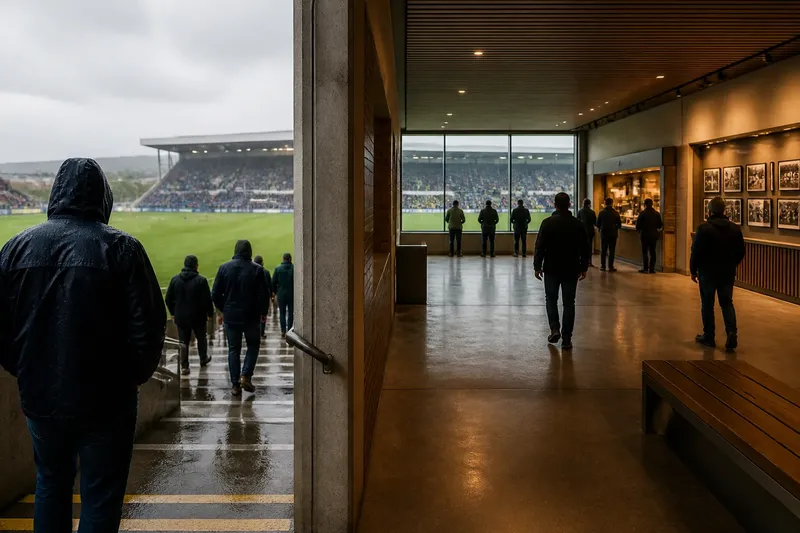
Say a visitor arrives at Northbank’s old stand on a wet afternoon and pauses on the top landing to look towards the pitch. The rain drives them onward, so the first view is brief; they reach their row without a sheltered place to linger. The likely trade-off is clear: the open stand offers an immediate sense of occasion, but not much control over how long that moment lasts.
Enclosed concourse character
An enclosed concourse creates an interval between the street and the seating bowl. Its roof and walls can soften the weather and sound, while windows, materials and displays give the interior a distinct identity. The visitor does not meet the whole stadium at once. Instead, the space can make the arrival feel gradual.
That interval can also make the venue feel more like an interior public place. A view through glazing may keep the pitch in sight; a club display may connect the building to its history. Food counters and seating areas add activity, but they can compete with the architecture’s quieter purpose: helping visitors recognise where they are in relation to the stadium.
In the fictional Northbank stand, a window frames the pitch from the concourse. A visitor who arrives early can watch the ground fill before entering the seating bowl. The observable difference is not that the enclosed route is automatically more comfortable. It gives the visitor a sheltered way to experience the build-up, while the open terrace delivers the crowd and weather more directly.
Sound, light and view
Enclosure changes how a stadium feels to the senses. Walls and ceilings can make crowd noise seem contained, while an open stand lets it mingle with the air around the building. The effect varies with the venue’s form and materials, so it is better to judge the actual space than rely on the word “covered”.
Light also shapes the transition. A bright opening at the end of a dim passage can draw the eye towards the bowl; a window can offer a view before the visitor reaches the seats. In an open stand, daylight is already part of the route. The difference is not merely visual. It affects whether the stadium is revealed in a moment or in stages.
These choices influence the venue’s character. A concourse lined with local photographs, for example, can make an otherwise functional passage feel specific to its club and place. A display that covers a window may remove a useful connection to the pitch. Design details work best when they contribute to the experience without asking visitors to ignore the building around them.
Comparing the arrival?
Does an enclosed concourse feel quieter?
It may soften exposure to weather and change how crowd noise is heard, but the result depends on the building’s layout and materials. A busy interior can still feel lively rather than calm.
Can an open terrace create a stronger first impression?
It can reveal the crowd and pitch quickly, which some visitors may find energising. The same immediacy leaves less room for a gradual arrival.
What makes a concourse feel like part of the stadium?
Views of the pitch, club imagery and materials connected to the venue can give the interior a recognisable character. They should relate to the place rather than read as decoration added without context.
Reading the venue
For a venue team comparing open terraces with enclosed concourses, the useful question is what each space lets visitors notice. Consider the approach from the turnstile, the view towards the pitch, the way sound carries and whether the interior has a character beyond its functions.
- Observation: the pitch is visible from the concourse; if that view helps visitors understand their position, keep it open, but if it draws attention away from the next destination, adjust the display or glazing treatment.
- Observation: an open landing is exposed to rain; if visitors have no sheltered place to pause, provide an alternative away from the stair, but if the landing already serves only as a route, avoid adding a feature that invites people to stop there.
- Observation: a club display covers a window; if the display blocks a useful view of the ground, move or reduce it, but if the window has little value for orientation, retain the display where it fits.
- Observation: crowd noise changes sharply between the concourse and seating bowl; if the transition feels abrupt, review the openings and interior finishes, but if the contrast suits the venue’s intended atmosphere, leave it intact.
- Observation: the concourse feels generic beside the stands; if local imagery or materials can add identity without obscuring views, use them, but if they crowd the space, keep the interior simpler.
- Observation: visitors arrive in wet clothing and have nowhere to pause briefly; if the stand has a suitable sheltered recess, make its purpose apparent, but if no such space exists, do not turn a narrow landing into a waiting area.
Choosing the experience
Neither open terraces nor enclosed concourses provide a universal model for stadium arrival. The open stand offers an immediate encounter with weather, crowd and pitch. The enclosed concourse creates a more gradual transition, with opportunities to shape the interior’s sound, views and identity.
When assessing open terraces and enclosed concourses, focus on the experience each one actually creates. A useful final check is to stand where a visitor first enters the stand and ask what they notice before anything else: the pitch, the crowd, the building or the weather. That answer reveals what the design has made part of the arrival.