A First Stadium Visit, Planned Around the Pause
A first stadium visit feels calmer with a pause built in: learn where to orient yourself, check your route and reach your seat without rushing.
How do you make a first stadium visit manageable before you know the building? A first stadium visit is easier when you plan a pause between arrival and finding your seat. It gives you room to sort out the practical details without turning the concourse into your personal office.
That pause need not be a special lounge or a long stop. It is simply a place to check what you need, regroup with a companion or decide whether to head straight to your seat. The useful question is not just where to go, but what needs doing before you go there.
Set your priorities
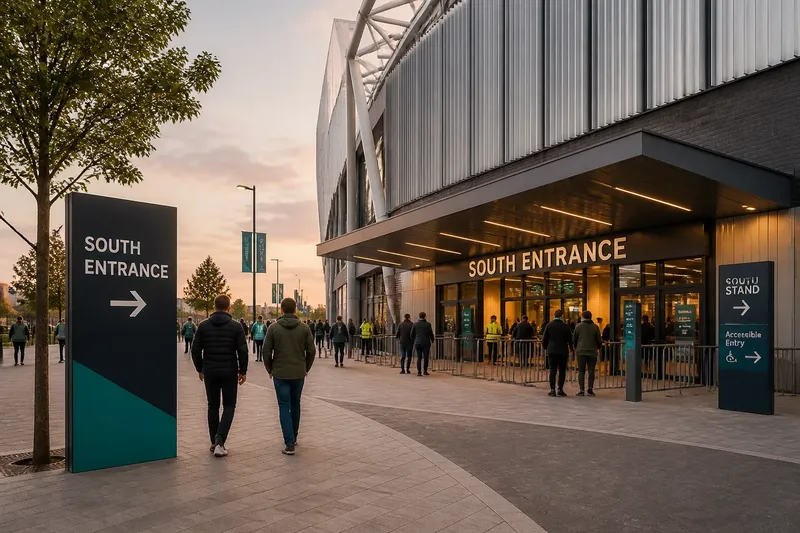
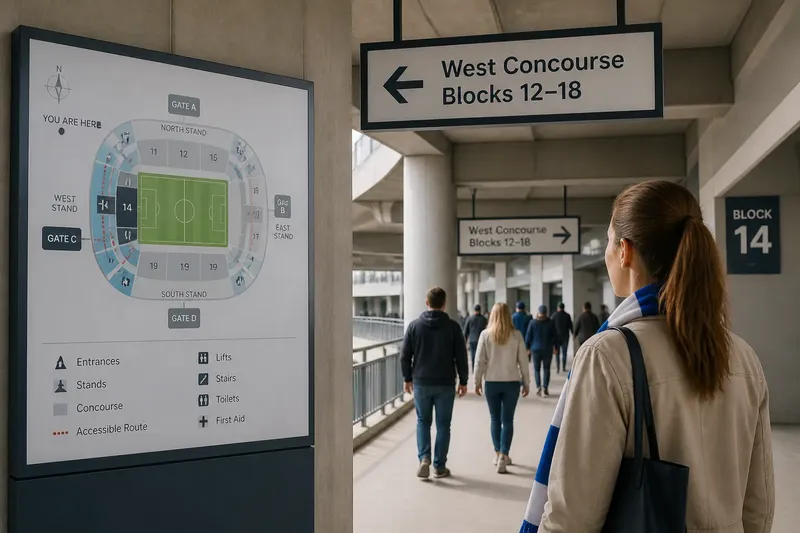
Before setting out, check the venue’s current entry guidance, your ticket and any arrangements you have made with the venue. Note the gate, section and any access information you may need. Keep your ticket available in the format the venue accepts, and check its rules on bags and other items.
Choose one practical task for your first pause. You might need to reunite with a companion, use the toilet or confirm a seating arrangement. A short list in your phone or on paper can help, but keep it to tasks that affect the next part of the visit. There is no need to plan every sandwich and conversation in advance.
Think about what makes a pause workable for your group. A companion who walks more slowly may need time to catch up. A child may need a toilet stop before you look for the seats. If you need an accessible route, seating or a quieter place, contact the venue beforehand and ask what is available for your event.
Use shared spaces well
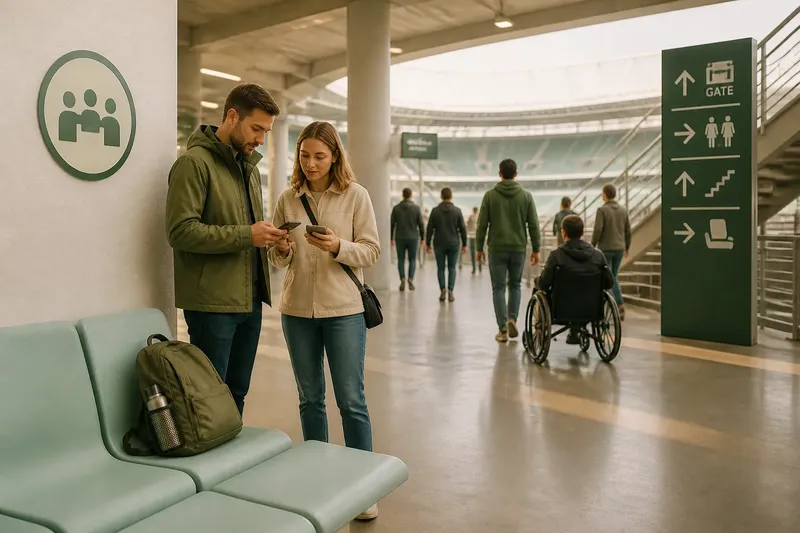
Stadium concourses are used for moving, waiting, eating and meeting. A place that feels empty for a moment may soon become a route for other visitors. Choose a marked waiting area, a designated seating space or an edge of the concourse where people can pass freely.
Keep doorways, stairs, queues and narrow passages clear. Put bags close to you rather than across the floor, and avoid gathering around a counter unless you are ordering. For a longer rest, move to a place intended for sitting instead of lingering at a junction.
Imagine you arrive with a friend and need to check whether you have both brought the right tickets. You move to a marked waiting area away from the entrance, compare the ticket details and discover that one ticket is on the other person’s phone. You can then sort out access before joining the entry flow, rather than doing the phone shuffle in a doorway.
Make a simple plan
A short plan is more useful than a minute-by-minute schedule. For each task, identify what you need to check and what you will do if the answer is not what you expect.
- Check the ticket format accepted by the venue; if your ticket is not available in that format, follow the venue’s instructions before travelling rather than relying on the entrance staff to resolve it.
- Check the event’s current entry guidance; if your assigned gate has changed, use the updated instructions rather than heading to the old entrance.
- Check whether everyone in your group has their ticket accessible; if someone cannot retrieve theirs, move aside and help them before joining the entry queue.
- Check the venue’s bag and item rules; if an item is not permitted, leave it behind or follow the venue’s stated storage option.
- Check whether your group needs an access arrangement; if the published information does not answer the question, contact the venue before the event rather than guessing at the gate.
- Check that your meeting point is outside the entrance and circulation routes; if it is beside a doorway, stair or queue, choose a designated waiting area instead.
Say you are attending with a friend who needs step-free access. You have the ticket details, the venue’s entry guidance and a message confirming that you should use its accessible entrance. You check the current event notice before leaving; it says that entrance is open. You tell your friend to meet you at the venue’s designated accessible waiting point, then enter together. If the notice instead says to use another entrance, you would follow that update and change the meeting point. The trade-off is a little advance checking in exchange for not having to settle access arrangements in a busy entry stream.
What should you check first?
Which gate should I use?
Check the gate printed on your ticket and compare it with the venue’s current event information. If the two differ, follow the latest venue instruction or ask its staff before joining a queue.
Where can I meet my group?
Use a venue-designated meeting point or another place that is easy to describe and clear of entrances and routes. If the proposed spot is beside a busy doorway, choose a marked waiting area instead.
What if someone is delayed?
Agree on a meeting point before entering, and make sure everyone can describe it in the same way. If a person cannot reach it, contact them and ask venue staff for help rather than searching through a crowd.
Where can I rest?
Look for marked seating or a designated waiting area, and ask staff if you cannot find one. If no seat is available, move to a place where standing does not obstruct a doorway, queue or route.
Adjust as needed
Plans may change if a companion is delayed, an access arrangement needs attention or a shared space is busier than expected. Keep the plan in broad parts: enter, regroup if needed, handle the immediate task and continue. If the intended meeting place is crowded, use the alternative agreed with your group rather than stopping in the nearest doorway.
For a group, name a meeting point that is straightforward to describe, such as the venue’s information point or a marked waiting area. Agree on an alternative in case the first place is inaccessible or busy. Keep any arrangements for children or people who may need assistance clear, and follow the venue’s directions if staff ask the group to move.
For a first stadium visit, a planned pause is useful because it gives your group somewhere to handle small practical needs without obstructing others. Choose the place with care, keep the task simple and change the plan when the venue’s current arrangements call for it. Then the concourse can remain a shared space, rather than an impromptu meeting room.